
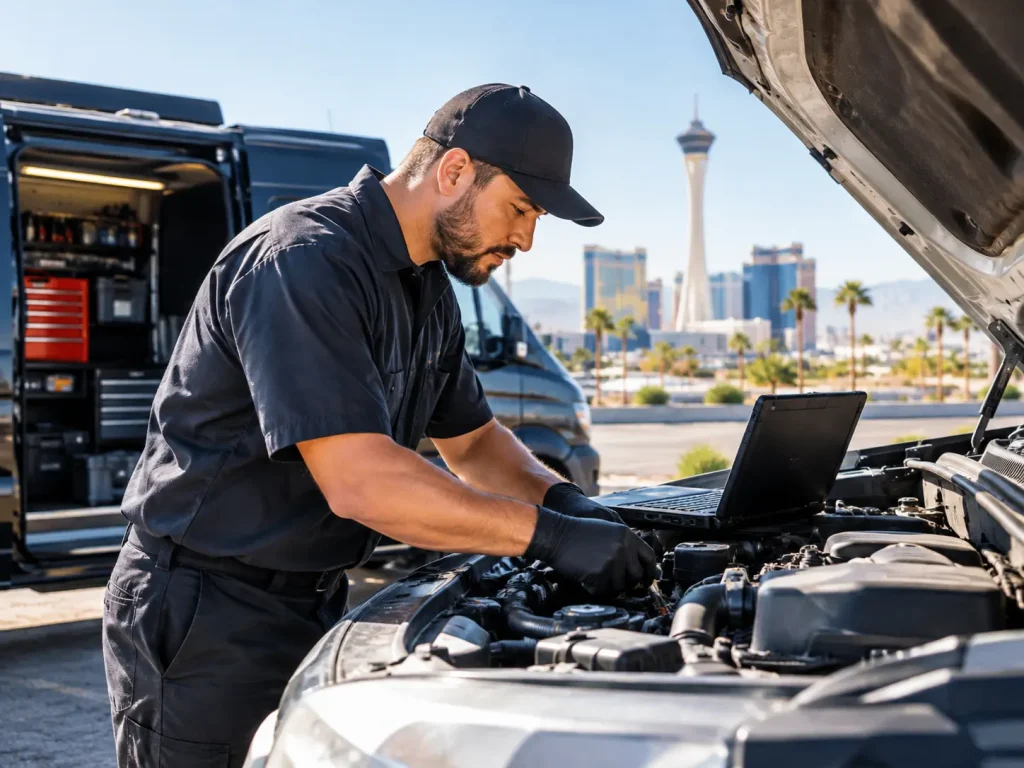
For a small business, a work vehicle is not just a car. It is the delivery van that gets product to customers, the pickup that carries tools to the job site, or the service truck that keeps appointments on schedule. When one of those vehicles is down, work stops, customers wait, and money is lost. Large companies have maintenance departments and spare vehicles to absorb the hit. Small businesses usually do not. That is why a simple, steady maintenance plan matters so much. This guide shares practical fleet maintenance tips for small businesses in Marietta, explains how to keep work vehicles on the road, and shows how mobile fleet service can bring maintenance and commercial vehicle repair to your lot, shop, or job site.
Why Fleet Maintenance Matters More for Small Businesses
When you have two, five, or ten vehicles, each one carries a large share of your daily work. A breakdown does more than cost a repair. It can mean missed appointments, late deliveries, overtime to catch up, and unhappy customers who may not call again. Unplanned repairs also tend to cost more than planned ones, because a small problem that goes unchecked often turns into a bigger one. Regular maintenance helps you spot issues early, schedule work at convenient times, and avoid the stress of an emergency tow in the middle of a busy week.
Tip One: Build a Written Maintenance Schedule
The most useful thing you can do is write it down. For each vehicle, list the year, make, model, mileage, and the service intervals in its owner’s manual. Then track when each service was last done and when the next one is due. A simple spreadsheet or a shared calendar works fine. Include oil changes, filters, brake inspections, tire rotations, fluid services, belts, and battery checks. Work vehicles often fall under the severe service schedule in the manual because of heavy loads, short trips, frequent stops, and idling, so check which schedule fits how your vehicles are really used.
Tip Two: Keep a Record for Every Vehicle
A service log for each vehicle pays off over time. Record the date, the mileage, what was done, and any notes about problems. A good history helps you see which vehicles are costing the most, decide when it makes sense to replace one, and give a technician useful background when something goes wrong. It also helps with resale and with any warranty questions, since it shows the vehicle has been looked after.
Tip Three: Ask Drivers to Do a Quick Daily Check
Your drivers see the vehicles every day, so they are your first line of defense. A two minute walk around before the first trip can catch a lot. Ask them to look at:
- Tires, for visible damage, low pressure, or uneven wear
- Lights, turn signals, and brake lights
- Windshield, wipers, and mirrors
- Fluid leaks under the vehicle
- Dashboard warning lights when the engine starts
- Any new noises, vibrations, or smells
- Cargo and tools, to make sure the load is secured and not overweight
Make it easy for drivers to report problems, and make sure they know that reporting something early is encouraged. A driver who mentions a faint noise on Monday can save you from a breakdown on Friday.
Tip Four: Do Not Skip the Basics
Most fleet trouble comes from the basics being delayed. Fresh oil and filters protect the engine. Healthy brakes protect your drivers and everyone around them. Correct tire pressure improves safety and fuel economy and helps tires last longer. Clean coolant and good belts and hoses help prevent overheating. A strong battery helps your vehicles start on the first try every morning. None of these items is exciting, but together they account for a large share of avoidable downtime.
Tip Five: Take Brakes and Tires Seriously
Work vehicles carry heavy loads, stop often, and drive many miles, which wears brakes and tires faster than ordinary commuting. Listen for squeals, grinding, or a soft pedal, and have any of those checked promptly. Watch tires for uneven wear, which can point to alignment or suspension problems. Check pressure regularly, since loaded vehicles are especially sensitive to it. Your owner’s manual lists the recommended pressure and load limits for each vehicle, and following them is one of the simplest ways to protect your drivers and your equipment.
Tip Six: Pay Attention to Warning Lights
A dashboard warning light is a request for attention. A check engine light, a temperature warning, a battery light, or a brake light all mean something needs to be looked at. Some are urgent and some can wait a short time, but none should be ignored for weeks. Set a simple rule for your team: if a warning light comes on, tell the person in charge the same day, and have the vehicle checked on a schedule that fits the severity. Drivers should know to stop and call for help if a red warning light comes on or the vehicle feels unsafe.
Tip Seven: Schedule Service Around Your Work
The biggest hidden cost of maintenance is the time a vehicle sits at a shop. Dropping off a van, arranging a ride, and waiting for pickup can take a half day or more, and that time is not billable. The best approach is to schedule maintenance for slow times, such as early morning, evenings, or quiet days of the week, and to stagger vehicles so that you never take several out of service at once. That keeps the business running while the fleet stays healthy.
Tip Eight: Watch the Problem Systems
Almost every fleet has one system that keeps causing trouble, whether it is brakes, batteries, cooling, or something electrical. Tracking your service history helps you spot the pattern. Our article on the one system that keeps causing problems looks at this idea more closely and is worth a read if the same issue keeps coming back in your vehicles. When a problem returns again and again, it is usually a sign to look for the root cause instead of repeating the same repair.
Tip Nine: Know When to Repair and When to Replace
Every vehicle reaches a point where repair costs start to outweigh its value. Your service log can help you decide. If a vehicle needs frequent repairs, has serious problems on the way, or is no longer reliable enough for customer facing work, it may be time to plan a replacement. Making that decision on your own schedule is far better than having it made for you by a breakdown. A technician can give you an honest assessment of a vehicle’s condition to support the decision.
Tip Ten: Plan for Seasons and Conditions
Georgia weather brings hot, humid summers and the occasional cold snap, and both affect vehicles. Heat is hard on batteries, tires, coolant, and air conditioning. Cooler mornings can expose weak batteries. Stop and go traffic around metro Atlanta adds wear to brakes and transmissions. Planning inspections before the hottest months and again before winter helps catch problems before they leave a vehicle stranded.
What Is Mobile Fleet Service?
Mobile fleet service means the mechanic comes to your vehicles instead of the vehicles going to the mechanic. A technician arrives at your lot, your shop, or your job site with the tools and parts to handle many common maintenance and repair jobs on the spot. For a small business, that offers real advantages:
- Vehicles stay close to work, with less time lost driving to and from a shop
- Several vehicles can often be serviced in one visit
- Drivers can keep working while maintenance happens at a convenient time
- You can talk to the technician directly and see what is being done
- Small issues can be caught during routine visits before they become breakdowns
What Can a Mobile Mechanic Handle for a Fleet?
Many routine and common repair jobs can be done on site. Depending on the vehicle and the situation, a mobile mechanic can often help with oil and filter changes, brake service, battery testing and replacement, starter and alternator work, belts and hoses, cooling system service, diagnostics for warning lights, tune up items, and general inspections. If you have a breakdown, a technician can often diagnose the problem where the vehicle sits. Some work, such as major engine or transmission repair, heavy equipment, or jobs that need a lift or specialized equipment, may need a full shop, and a trustworthy technician will tell you honestly when that is the case. It also helps to share your vehicle types and any special equipment up front, so the right tools and parts are on the truck.
How to Get Started With Fleet Maintenance
- List every vehicle with its year, make, model, mileage, and current condition
- Pull the service schedule from each owner’s manual
- Note the last service date for each item you can find
- Pick a simple tracking method and keep it up to date
- Ask drivers to report issues early and do a quick daily check
- Schedule a baseline inspection so you know where each vehicle stands
- Set maintenance dates around your busy and slow periods
- Find a technician you trust and give them your vehicle history
A Simple Way to Stay Road Ready
Good fleet maintenance does not have to be complicated. It comes down to regular service, early attention to small problems, and a reliable partner who makes it easy. Our article on the no fuss way to stay road ready offers more on keeping things simple, and the steps in this guide can be put in place in an afternoon. The payoff is fewer surprises, steadier work, and vehicles that last longer.
Keep Your Work Vehicles Working
Every hour a vehicle is out of service costs your business something. A bit of planning, steady maintenance, and on site service can keep that number small. If you are not sure where your fleet stands today, an inspection is a good place to start.
To learn more about our services, visit our homepage. If you would like help with your work vehicles, reach out through our contact us page and we will come to you anywhere in the Marietta area.