
Marietta commuters heading into Atlanta each morning know the drill along I 75 South, watching the traffic thicken well before the Cumberland interchange and rarely loosening up again until well past the Downtown Connector. This daily grind, a solid stretch of highway followed by dense urban congestion, does not wear every part of a vehicle equally. Some components take the brunt of this specific commute pattern considerably sooner than others, and knowing the order in which trouble tends to show up helps Marietta drivers stay ahead of repairs rather than reacting to them.
First To Go: Brake Pads
Brake pads are almost always the first component to show real wear on a Marietta to Atlanta commute, and the reason comes down to how much of this drive involves repeated stopping rather than steady cruising. Even though a meaningful portion of the trip happens on I 75 at highway speed, the congestion around the Cumberland Mall area, the merge points near the Perimeter, and the general crawl through Atlanta’s core all add up to a disproportionate amount of stop and go braking relative to the total miles covered.
This means Marietta commuters often need brake service noticeably sooner than the mileage on their odometer would suggest, since a large share of that mileage was accumulated during exactly the kind of driving that wears pads down fastest. A squealing sound from the built in wear indicator is usually the first sign, and it tends to show up earlier on this commute than a driver covering similar distance on more open roads would typically experience.
Second: Transmission Fluid Condition
Following closely behind brake wear, transmission fluid tends to be the next system showing signs of strain. The combination of steady highway cruising followed by dense, shifting heavy traffic asks a transmission to handle two very different driving modes within a single trip, and the heat generated by frequent shifting during the congested portion of the commute accelerates fluid breakdown faster than a purely highway commute would cause.
Rough or delayed shifting, particularly noticeable when accelerating from a stop after sitting in Atlanta traffic, is often the first noticeable symptom here, generally appearing somewhat later than brake wear but still sooner than a standard maintenance interval would predict for the same overall mileage.
Third: Tires, Driven Mostly By Mileage
Tires wear out on a different timeline than brakes and transmission fluid, driven more by raw mileage than by the specific stop and go character of the drive. Since a Marietta to Atlanta round trip covers meaningful distance every single day, tires reach their tread wear limits on a fairly predictable schedule tied to total miles, though the additional heat generated during congested stretches can accelerate wear slightly compared to the same mileage covered entirely at highway speed.
Checking tread depth regularly, rather than waiting for the wear bars to become obvious, helps Marietta commuters catch this third stage of wear before it becomes a safety concern, particularly given how much daily mileage this commute adds up to over the course of a year.
Fourth: Battery Health, Often The Slowest To Show
Battery wear tends to be the last of these four systems to reveal itself, though it is affected by the commute pattern in its own way. Stop and go traffic means more frequent electrical demand from accessories running while the engine idles at low RPM, and Georgia’s hot summers add heat related battery degradation on top of that demand. This combination means batteries on this commute may not last quite as long as they would under lighter use, though the decline tends to be gradual enough that many drivers do not notice until a slow crank or a complete failure catches them off guard.
Because this decline is so gradual, a battery on the older side is worth testing proactively rather than waiting for an obvious symptom. A battery that has already been through a couple of Georgia summers combined with the daily demands of this commute is a reasonable candidate for testing even if it currently starts the car without hesitation, simply because the margin for a sudden failure narrows considerably as a battery ages under this kind of consistent daily use.
For a broader look at simple, low effort habits that help keep a commuter vehicle in good shape overall, our article on the no fuss way to stay road ready covers practical maintenance habits that pair well with paying attention to this specific wear order.
Why Knowing This Order Actually Helps
Understanding that brakes tend to go first, followed by transmission fluid, then tires, then battery health, gives Marietta commuters a practical framework for what to check and when, rather than treating every system as equally due for attention at the same time. This sequence is not universal for every vehicle or every driver, but it reflects the general pattern this specific highway plus city traffic combination tends to produce, and it is a reasonable starting point for prioritizing inspections given a limited amount of time or budget for maintenance in any given month.
It is worth noting that this order can shift somewhat depending on the specific vehicle involved, since a car with already aging tires or a battery approaching the end of its typical lifespan might see one of these later stage issues arrive earlier than the general pattern would suggest. Treating this sequence as a helpful guideline rather than a strict rule allows for the reality that every vehicle carries its own maintenance history into a commute like this one.
Some vehicles develop a persistent issue that keeps resurfacing despite repeated attention, and if that sounds familiar, our article on one system that keeps causing problems digs into why a single recurring issue can be harder to fully resolve than the more predictable wear pattern covered here.
Adjusting Your Maintenance Schedule Accordingly
Rather than waiting for the mileage markers in your owner’s manual, it makes sense to check brakes every six months given how quickly this commute wears them down, inspect transmission fluid condition a bit ahead of the standard interval, rotate and measure tire tread on a slightly accelerated schedule, and have battery health tested proactively before summer heat has a chance to reveal a weakness at an inconvenient moment.
Why A Mobile Mechanic Fits This Commute Pattern Well
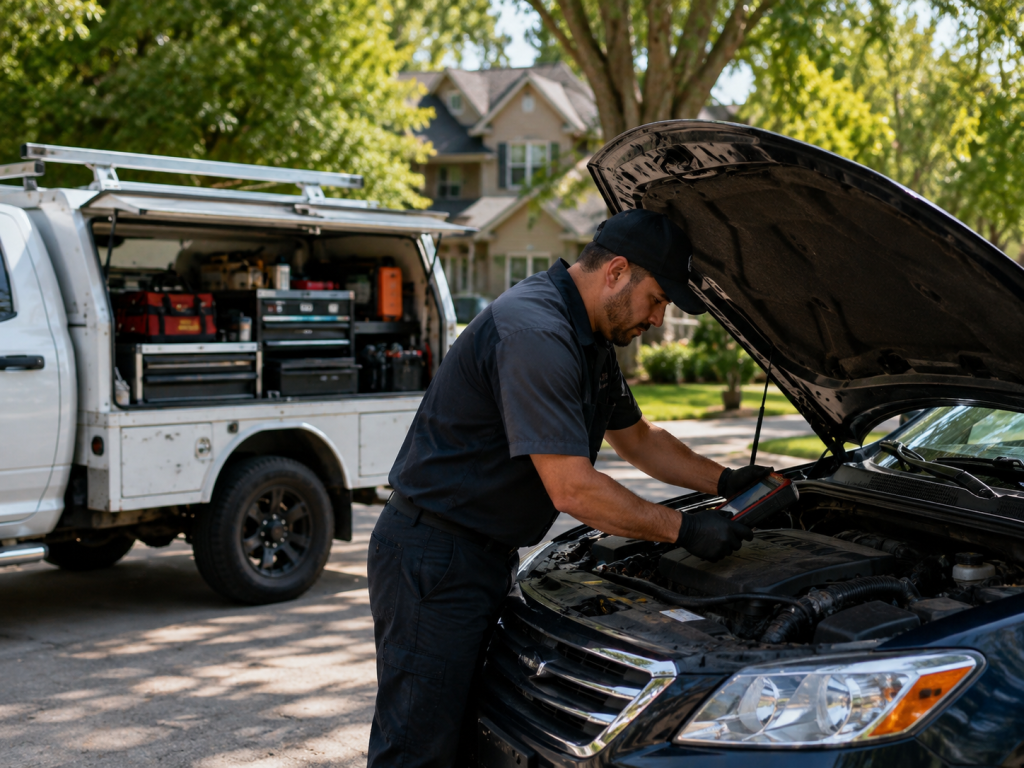
Given how much time is already spent commuting between Marietta and Atlanta, adding a separate trip to a repair shop is not appealing. A mobile mechanic can come to your home in Marietta and check brakes, transmission fluid, tires, and battery health in one visit, addressing this predictable wear sequence without requiring additional time navigating the same roads that caused the wear in the first place.
If it has been a while since your vehicle had a proper inspection, reach out through our contact us page to schedule a visit at your home or office at a time that fits your schedule, or visit our homepage to learn more about our services throughout the Marietta area.
A little attention to this predictable wear order can help your car keep pace with everything the Marietta to Atlanta commute quietly asks of it every single day.